
.png)
 (956) 276-8819
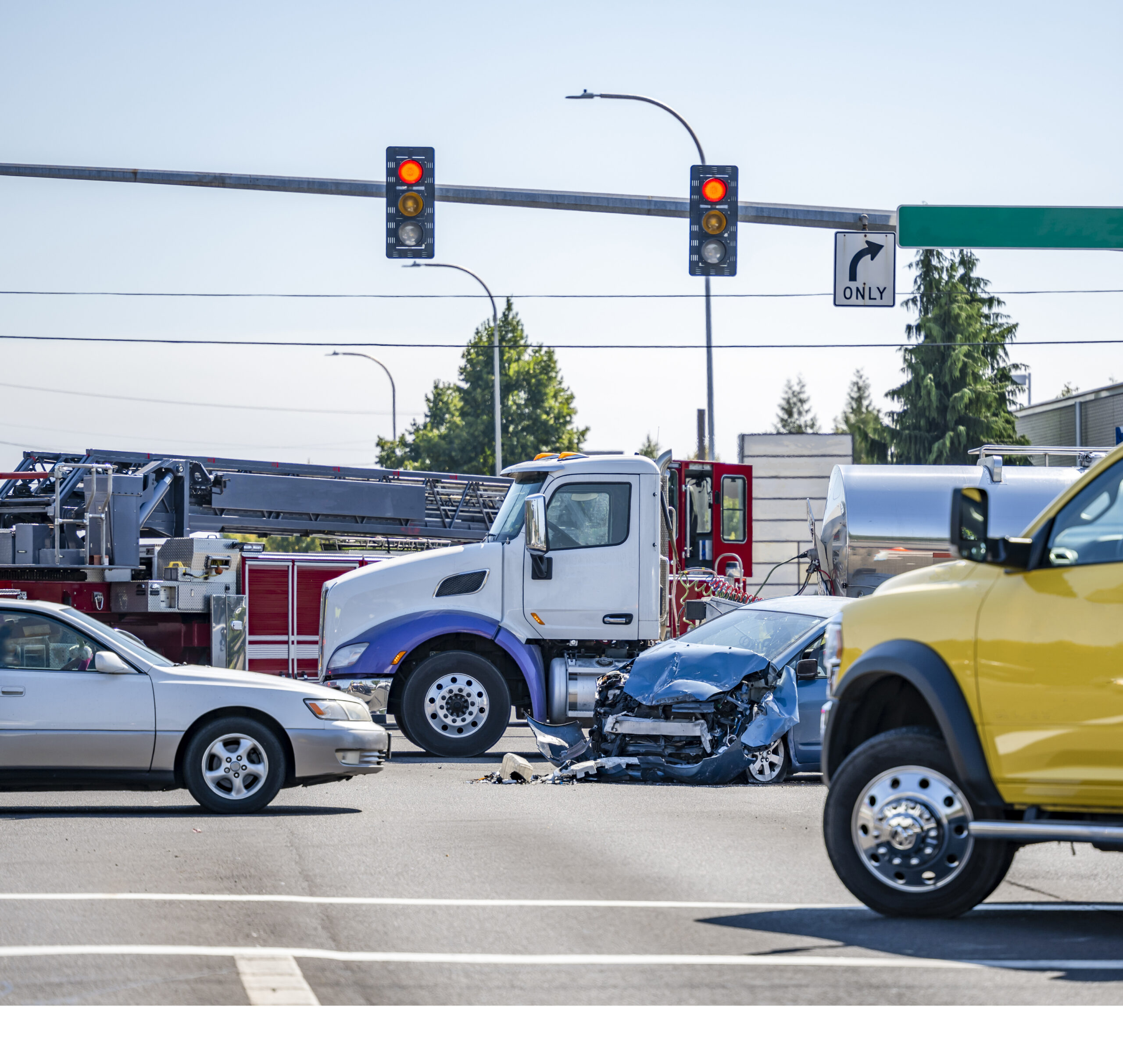
Commercial carrier accidents are unlike ordinary car crashes. When an 18-wheeler, delivery truck, or other large commercial vehicle collides with a passenger car on roads like US-281 or Expressway 83 near Edinburg, the injuries are often severe, the property damage is extensive, and the legal landscape is far more complicated. If you or someone you love was involved in one of these collisions, understanding what comes next is critical.
What Makes Commercial Carrier Accidents Different?
Commercial carrier crashes involve federal regulations, multiple liable parties, and insurance policies with far higher limits than standard auto claims.
A commercial carrier is not just a big car. These vehicles operate under a web of federal regulations administered by the Federal Motor Carrier Safety Administration (FMCSA), which sets rules on driver hours, vehicle maintenance, cargo loading, and licensing. When a carrier violates those rules, that violation can become a central piece of your case.
Beyond the driver, commercial vehicle accidents often involve multiple responsible parties. The trucking company, a third-party cargo loader, a vehicle maintenance contractor, or even a parts manufacturer may share liability. Identifying each of those parties early, before evidence disappears, is one of the most important steps in protecting a claim.
What Should You Do Immediately After the Crash?
Call 911, seek medical care, and document the scene as thoroughly as possible before leaving or speaking to any insurance representative.
The minutes and hours after a commercial carrier accident shape everything that follows. Here is what matters most:
- Call 911 so that law enforcement can document the scene and generate a crash report.
- Seek medical attention right away, even if you feel fine. Adrenaline masks pain, and delayed treatment can hurt both your health and your claim.
- Photograph the vehicles, road conditions, cargo spills, skid marks, and any visible injuries.
- Gather the driver’s commercial license number, carrier name, USDOT number from the truck’s door, and insurance information.
- Avoid giving a recorded statement to any insurance adjuster before speaking with an attorney.
Texas law requires that crashes involving injury, death, or property damage above a certain threshold be reported. The investigating officer will typically file a CR-3 crash report, which you can later obtain through the Texas Department of Transportation.
Who Investigates a Commercial Carrier Crash?
Multiple agencies, including local law enforcement, the Texas Department of Public Safety, and occasionally federal agencies like the FMCSA, may investigate a commercial carrier crash, and the trucking company’s legal team often arrives at the scene within hours.
One thing many people do not realize is that large carriers have rapid-response teams. When a serious crash happens, the carrier’s attorneys and insurance adjusters may be on-site quickly, gathering evidence that supports their version of events.
This is why acting fast on your own behalf matters. A truck accident attorney in Edinburg can send a spoliation letter to the carrier, demanding preservation of the truck’s electronic logging device (ELD) data, dashcam footage, maintenance records, and the driver’s hours-of-service logs. Carriers are only required to retain ELD data for six months, and crucial evidence, such as dashcam footage, may be overwritten even sooner without a formal legal hold.
How Does the Claims Process Work?
After a commercial carrier accident, you may file claims against the driver, the carrier, and any other liable parties, each with separate insurance policies and legal teams.
Texas follows an at-fault system, meaning the party responsible for the crash bears liability for resulting damages. Under Texas Civil Practice and Remedies Code Chapter 33, Texas uses a modified comparative fault rule. You can recover damages as long as you are not more than 50 percent responsible for the accident. Your recovery is reduced by your percentage of fault.
Federal rules require many interstate for-hire general-freight carriers operating vehicles with a GVWR over 10,000 pounds to carry at least $750,000 in liability coverage, with higher minimums ranging from $1 million to $5 million for certain hazardous materials. In practice, large carriers often carry policies that far exceed those minimums, which means more coverage is available but also that their insurers fight claims aggressively.
The claims process typically involves:
- Filing claims with the applicable insurance carriers
- Responding to requests for your medical records and statements
- Negotiating a settlement or, if necessary, filing a lawsuit
Texas has a two-year statute of limitations for personal injury claims under Texas Civil Practice and Remedies Code Section 16.003. Missing that deadline generally bars recovery entirely.
What Damages Can You Pursue?
Victims of commercial carrier accidents in Texas may pursue compensation for medical expenses, lost wages, pain and suffering, and more, depending on the facts of the case.
Recoverable damages in a Texas commercial carrier case can include past and future medical costs, lost income and reduced earning capacity, physical pain and emotional distress, and property damage. In cases involving gross negligence, Texas law also permits exemplary damages under Chapter 41 of the Texas Civil Practice and Remedies Code, provided gross negligence, malice, or fraud is proven by clear and convincing evidence.
The severity of commercial carrier crashes, combined with the complexity of multi-party liability and large insurance policies, often means these cases involve amounts significantly higher than typical car accident claims. That also means the defense has far more resources and motivation to minimize what you recover.
How the Law Office of Raul A. Guajardo, P.L.L.C. Can Help
Serving Edinburg and the surrounding Rio Grande Valley, the Law Office of Raul A. Guajardo, P.L.L.C. handles truck accident cases with the diligence and care that serious injuries demand. With 22 years of personal injury experience, our firm approaches every case as a trusted advocate, not just a legal service.
We work on a contingency fee basis, meaning you owe no legal fees unless we recover compensation for you. That means you can contact us to discuss your situation without any upfront cost or obligation.
If you were injured in a commercial carrier accident in Edinburg or anywhere in the Rio Grande Valley, call us at 956-276-8819 (Edinburg) or 956-476-6055 (McAllen). The sooner you reach out, the sooner we can begin preserving the evidence your case depends on.
Last updated: October 2026


