.png)
 (956) 276-8819
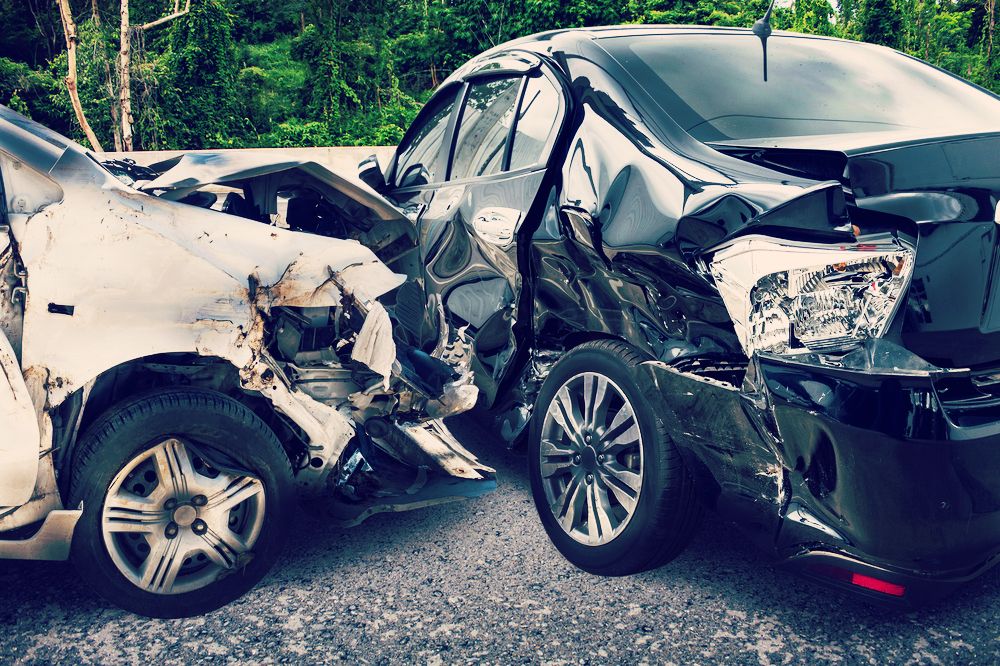
A police crash report can contain factual mistakes, incomplete information, or an incorrect opinion about how a collision occurred. A wrong driver name, inaccurate vehicle position, understated injury, or disputed fault conclusion can affect how an insurer evaluates your claim. It can also create confusion during litigation.
An inaccurate report is serious, but it is not automatically the final word. You can challenge errors, request a supplemental report, preserve evidence, and present information that corrects the record.
How Texas crash reports are created
Under Texas Transportation Code § 550.062, a law enforcement officer who investigates a motor vehicle collision must make a written report when the crash results in:
- Injury to a person;
- Death; or
- Property damage of at least $1,000 to any one person’s property.
The report must be filed electronically with the Texas Department of Transportation no later than the 10th day after the collision. The statute also allows the officer to investigate at the scene or later by interviewing drivers and witnesses.
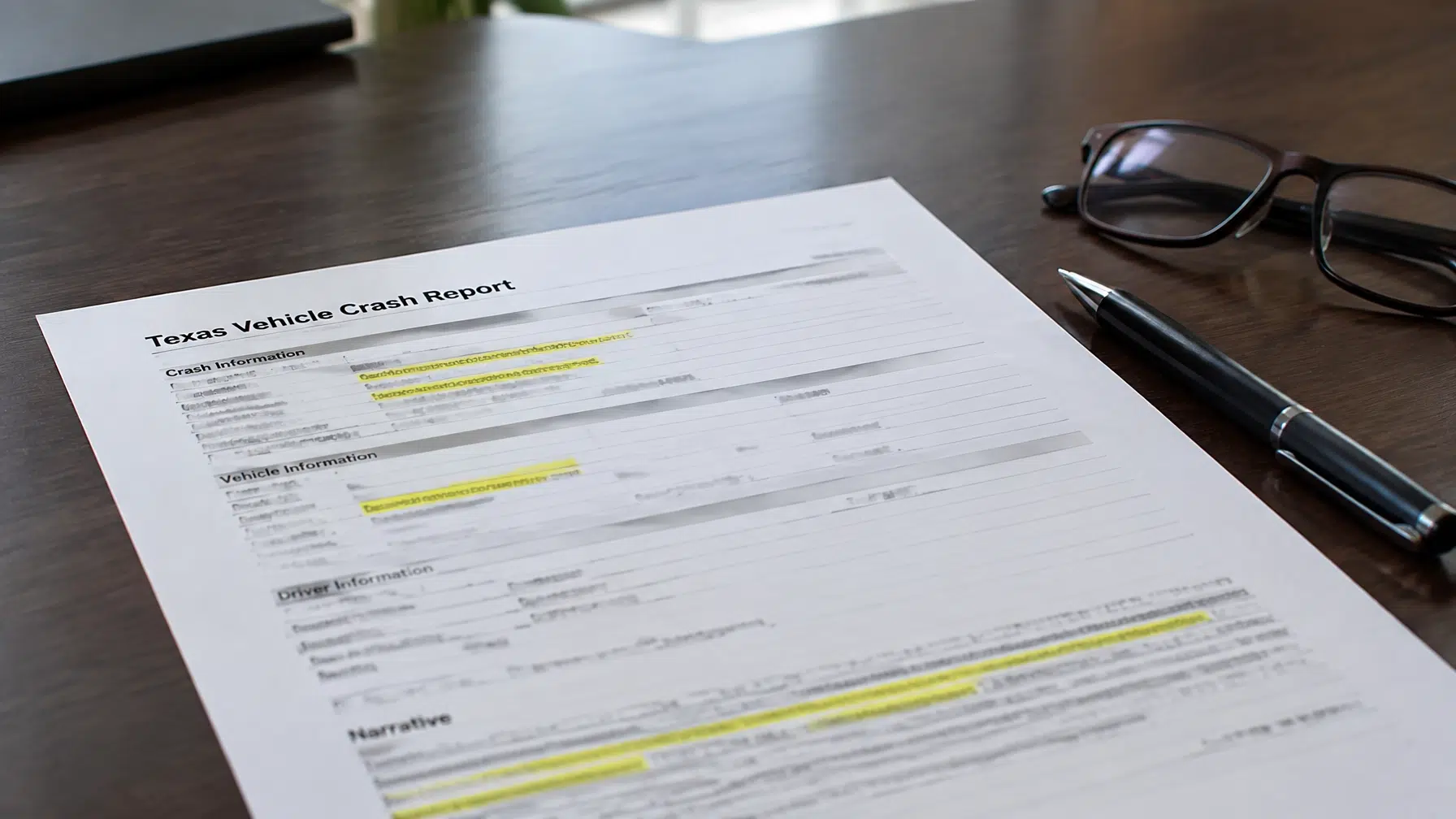
The officer’s report is generally prepared on the Texas Peace Officer’s Crash Report, commonly called the CR-3. The CR-3 includes information about the people and vehicles involved, roadway conditions, injuries, contributing factors, diagrams, statements, and the investigator’s description or opinion regarding what happened.
Crash reports are not freely available to everyone. Under Texas Transportation Code § 550.065, the report is generally released to people directly concerned with the collision or who have a proper interest, such as an involved driver, an injured person, an authorized representative, an insurer, or a vehicle owner.
What about the CR-2 “blue form”?
Texas previously used the CR-2 Driver’s Crash Report, sometimes called the blue form, for crashes that were not investigated by a police officer. In that process, the drivers, not an investigating officer, provided the narrative and described what they believed happened.
That creates a significant accuracy problem. Each driver may provide an incomplete or self-serving account. Important evidence may never be independently verified. One driver may claim that the other changed lanes, ran a red light, or was speeding. The other driver may describe the same event differently.
TxDOT no longer retains or provides CR-2 reports submitted after the state discontinued that process in 2017. Some local agencies may still provide a CR-2-style form or similar documentation for a driver’s records. If you completed one, preserve it. It may be treated as your written statement, and inconsistencies can become important later.
Common errors in a Texas crash report
Errors are not limited to spelling mistakes. A report may contain inaccuracies that affect liability, damages, or the credibility of the people involved.
Common problems include:
- A wrong driver name, address, or date of birth;
- An incorrect license plate number;
- A wrong vehicle identification number or vehicle description;
- The wrong vehicle listed as the striking vehicle;
- Mixed-up vehicle positions in the diagram;
- An incorrect direction of travel;
- An inaccurate speed estimate;
- An omitted witness or incorrect witness contact information;
- Missing information about phone use, fatigue, impairment, or other contributing factors;
- No citation recorded even though a citation was discussed at the scene;
- An incorrect road, intersection, or location description;
- Incorrect weather, lighting, or roadway conditions;
- Misidentified vehicle ownership;
- Incorrect insurance information; and
- An injury listed as “complaint of pain” or “not injured” when the person was later diagnosed with a fracture, concussion, spinal injury, or another serious condition.
The officer’s opinion about who caused the crash is often the most disputed portion. For example, a report may state that a driver failed to control speed even though the officer did not witness the collision, arrived after the vehicles had been moved, or did not interview an important witness.
An officer’s fault conclusion is not a court ruling
A police officer’s conclusion about fault is an opinion. It is not a judgment by a court, and it does not legally determine who must pay compensation.
Officers often arrive after a collision has occurred. They may not have seen the impact. They may rely on statements made by drivers who are frightened, injured, or confused. They may have limited time to document skid marks, debris, traffic signals, vehicle damage, and witness accounts.
The officer may reach a reasonable conclusion based on the information available at the time. That conclusion can still be incomplete or wrong.
Texas civil liability is determined from the evidence. The parties may present photographs, video, witness testimony, medical records, vehicle data, expert opinions, and other admissible evidence. A box checked on a CR-3 does not replace that process.
A crash report may also face evidentiary limitations in a civil case. Depending on the circumstances, portions of the report may raise hearsay, foundation, reliability, or improper-opinion issues. A court may give limited weight to an officer’s conclusion if the officer lacked personal knowledge or specialized training to reconstruct the collision. The report itself is not automatically binding proof of negligence.
How to request a correction or supplemental report
If you identify an error, contact the law enforcement agency that investigated the crash. Ask how the agency handles requests for a supplemental or amended report.
A written request is more effective than a phone call. Your request should:
- Identify the crash date, location, report number, and investigating officer;
- Describe each specific error;
- Explain why the information is inaccurate;
- Identify the correct information;
- Attach supporting evidence; and
- Request that the agency or officer prepare a supplemental report.
Useful supporting evidence may include photographs, dashcam footage, surveillance video, witness statements, repair records, medical records, and vehicle damage documentation.
Under Texas Transportation Code § 550.068, a material change to a report prepared by a peace officer generally may be made by the officer who prepared the original report. A different authorized person may make a change through a written supplement that clearly identifies who originated the change.
The agency may not agree with your interpretation. Agencies also vary in how they handle correction requests. A request does not guarantee that the officer will change the original conclusion. However, a well-supported request creates a record that you challenged the error and provided contrary evidence.
TxDOT’s crash report forms and law-enforcement instructions explain that supplemental information is submitted through the crash reporting system. A supplement does not erase the original report. It adds to or corrects the record.
Request the evidence behind the report
The written CR-3 is only one part of the investigative file. Ask your attorney to help preserve and obtain related evidence, including:
- The officer’s body-worn camera footage;
- The officer’s in-car or dashcam video;
- The CAD dispatch log;
- The 911 call and dispatch timeline;
- Traffic-camera footage;
- Photographs taken by the officer;
- Witness statements;
- Measurements, diagrams, and scene notes;
- Vehicle impound or tow records; and
- Any supplemental reports.
The CAD log may show when the call was received, when the officer was dispatched, and when the officer arrived. That timing can matter if the report relies on observations made long after the collision.
Traffic camera footage may be erased quickly. Surveillance footage from a business, apartment complex, school, or transportation authority may also have a short retention period. Prompt preservation requests can help prevent the loss of evidence.
Evidence that can correct an inaccurate report
Physical evidence often provides a more reliable account than an initial narrative. Depending on the collision, useful evidence may include:
- Photographs of vehicle damage;
- Photographs of the roadway, signs, signals, and lighting;
- Dashcam or surveillance footage;
- Independent witness statements;
- Skid marks, debris fields, and point-of-impact evidence;
- Event data recorder information from the vehicles;
- Cell phone records when distracted driving is suspected;
- Dispatch and driver records in a commercial vehicle case;
- Body-camera footage; and
- Medical records documenting injuries that were not apparent at the scene.
For example, a person involved in a crash on Expressway 83 may initially be listed as having only a complaint of pain. Later imaging may show a herniated disc or fracture. That later medical evidence does not necessarily mean the person was dishonest at the scene. Some injuries develop or become clear only after evaluation.
Similarly, photographs may contradict a diagram showing the wrong vehicle position. Damage patterns, paint transfer, and debris may show that the vehicles were positioned differently than the report states.
How an inaccurate report can be challenged in litigation
If the insurance company relies on an incorrect report, an attorney can present the evidence that contradicts it. An initial adverse liability decision by an insurer is not necessarily permanent.
If a lawsuit is filed, the report and the underlying investigation can be examined through the discovery process. That may include:
- Requesting the agency’s complete investigative file;
- Obtaining video, dispatch records, photographs, and supplements;
- Taking the investigating officer’s deposition;
- Asking the officer what information was available when the report was prepared;
- Identifying witnesses the officer did not interview;
- Presenting physical evidence that conflicts with the report; and
- Retaining an accident-reconstruction expert when the collision requires technical analysis.
An officer may testify about what the officer personally observed. The officer’s opinions may be challenged if they were based on incomplete information or if the officer lacks the qualifications required to offer specialized reconstruction opinions.
Why comparative negligence makes accuracy important
Texas follows modified comparative negligence. Under Texas Civil Practice and Remedies Code § 33.001, a claimant may not recover damages if the claimant’s percentage of responsibility is greater than 50 percent. When a claimant is 50 percent or less responsible, the damages are generally reduced according to that percentage.
A false or unsupported 51 percent fault finding could therefore be devastating. Even a lower percentage can reduce the compensation available for medical expenses, lost income, pain, impairment, and other damages.
That is why you should address a material error rather than assume it will correct itself.
Practical steps when you find an error
If your Texas crash report is inaccurate:
- Request a copy as soon as it becomes available.
- Read it line by line. Do not focus only on the fault conclusion.
- List every error separately.
- Gather evidence supporting each correction.
- Tell your attorney before contacting the investigating agency or insurer.
- Request a supplemental report in writing.
- Ask about body-camera, dashcam, CAD, and traffic-camera records.
- Avoid giving a recorded statement to an insurer while significant inaccuracies remain unresolved.
- Document medical conditions that the report understated.
- Preserve the original report exactly as you received it.
Do not mark up, alter, or destroy the original report. Do not rewrite the report and present the altered version as an official document. The original may remain discoverable, and changing it can appear to be tampering. Keep the original unchanged, identify the errors in a separate document, and use the supplemental-report and legal processes to correct the record.
An inaccurate report should not stop you from seeking medical treatment or pursuing a personal injury claim. Your medical care should be based on your condition, not on what an officer wrote at the scene.
Speak with a Texas personal injury attorney
The Law Office of Raul A. Guajardo, P.L.L.C. helps injured Texans investigate disputed crash reports and pursue fair compensation. Our firm has over 20 years of experience, a bilingual legal team, and no fees unless you win.
Contact one of our offices:
- Edinburg: 956-276-8819
- McAllen: 956-476-6055
- San Antonio: 956-318-3200
- Brownsville: 956-476-7074
Visit www.raulguajardo.com to learn more or request a consultation.
This article provides general information and is not legal advice. The effect of an inaccurate crash report depends on the facts, evidence, applicable deadlines, and procedural posture of your case.